Vocational Training in Germany: Complete Guide
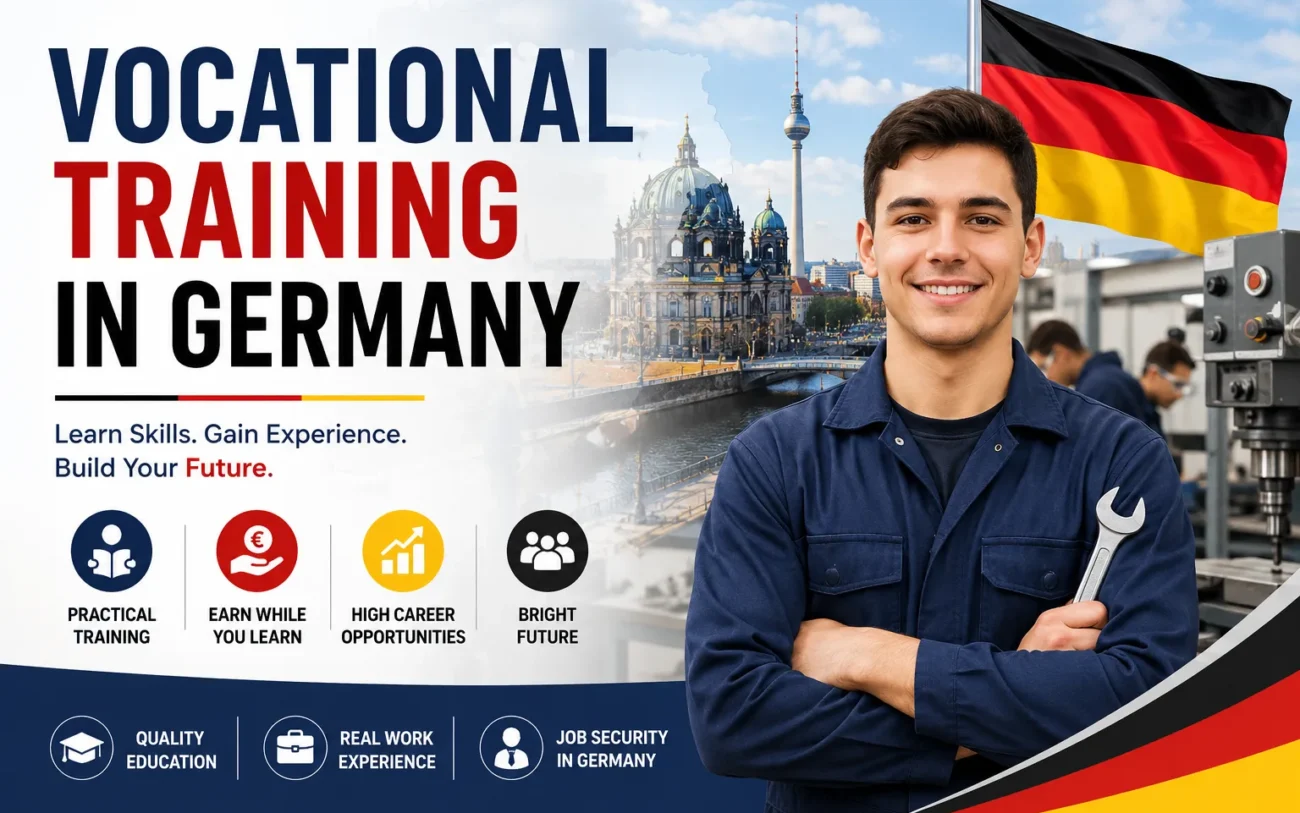
Germany has become one of the most preferred countries for students who want quality education and strong career opportunities. In recent years, Vocational training in Germany has gained massive popularity among international students because it offers practical learning, industry experience, and financial support during studies.
What is Ausbildung?
Benefits of Vocational Training in Germany
Earn While Studying
Practical Learning Experience
Affordable Education
Strong Career Opportunities
International Work Exposure
Popular Courses for International Students
- Nursing and Healthcare
- Hotel Management
- Information Technology
- Automotive Technology
- Mechatronics
- Electrician Training
- Plumbing
- Retail Management
- Construction and Engineering
- Bakery and Culinary Arts
Eligibility Requirements for Training Programs
- 10th or 12th pass certificate
- Basic academic background
- Good communication skills
German Language Skills
- A1, A2, or B1 German language certificate
- Valid passport
- Educational certificates
- Updated CV or Resume
- Language certificate
- Motivation letter
How to Apply for Vocational Training in Germany
Salary During Training Programs
| Field | Monthly Salary |
|---|---|
| Nursing | €1,100 – €1,400 |
| IT & Technology | €1,000 – €1,300 |
| Hospitality | €800 – €1,200 |
| Technical Trades | €1,000 – €1,500 |
Career Opportunities After Completing Training
- Apply for full-time jobs
- Gain international work experience
- Extend residence permits
- Build long-term careers
- Apply for permanent residency later
Challenges International Students May Face
Tips for Students Planning to Study in Germany
- Start learning German early
- Prepare a professional CV
- Research industries with high demand
- Improve communication skills
- Apply to multiple companies
- Stay updated about visa requirements
Conclusion
FAQs Vocational training in Germany
It is a practical training system where students learn professional skills through classroom education and company work experience.
Yes, international students can apply if they meet the educational and language requirements.
Yes, most programs require basic German language knowledge.
Yes, students receive a monthly stipend during their training period.
Healthcare, IT, engineering, hospitality, and technical fields are highly popular.
Most programs last between 2 and 3.5 years.
Yes, many students receive job opportunities and continue working in Germany.
It depends on career goals. Practical training is ideal for students who want hands-on experience and faster career opportunities.