
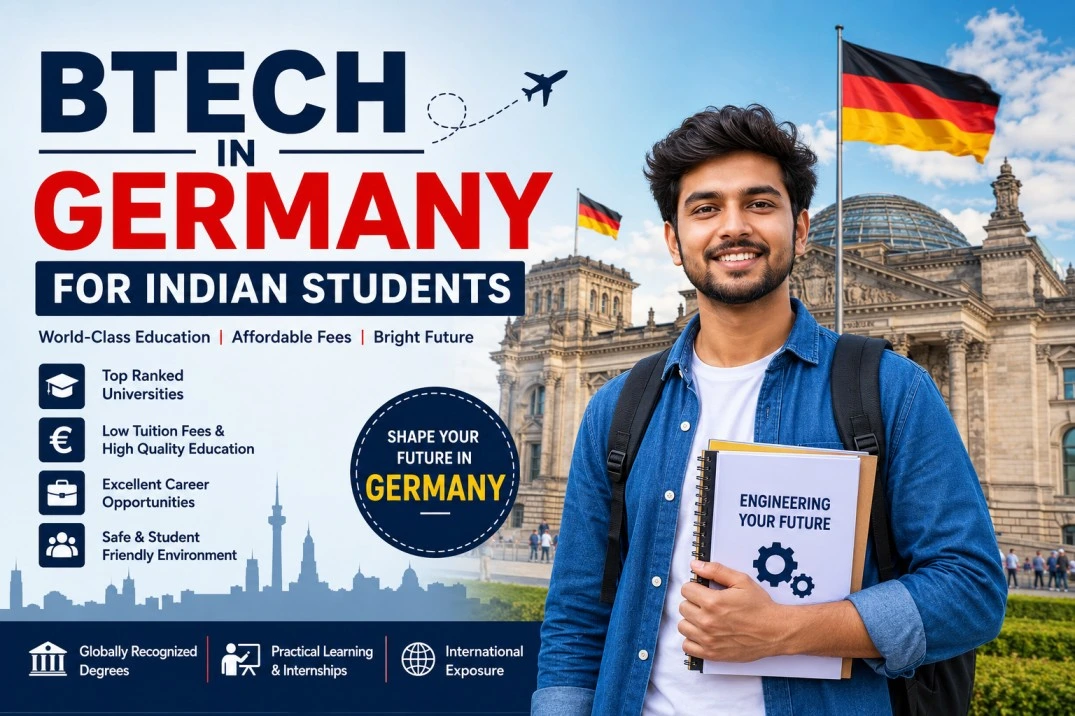
BTech in Germany
July 13, 2026

BTech in Germany for Indian Students: Complete Guide 2026

Every year, thousands of Indian students dream of studying engineering abroad. While countries like the USA, Canada, and the UK remain popular choices, Germany has become one of the best destinations for engineering education. With world-class universities, affordable tuition fees, modern research facilities, and excellent career opportunities, pursuing a BTech in Germany for Indian students is now more achievable than ever.

Germany is known as the engineering capital of Europe. It is home to globally recognized companies such as BMW, Mercedes-Benz, Volkswagen, Bosch, Siemens, SAP, and Audi. Studying engineering in Germany allows students to gain practical knowledge while building a strong foundation for an international career.
If you’re planning to study engineering after completing Class 12, this guide will help you understand everything about BTech in Germany, from eligibility and admission requirements to costs, scholarships, and future career opportunities.

Why Choose Germany for BTech?

Germany has earned a reputation for providing high-quality education at an affordable cost. Unlike many countries where international students pay very high tuition fees, many German public universities charge either no tuition fee or only a small semester contribution.
Here are some reasons why Indian students prefer Germany:
Germany’s education system focuses on innovation, technical skills, and industry exposure, making graduates highly employable worldwide.

Can Indian Students Study BTech in Germany After 12th?

Yes, Indian students can pursue engineering in Germany after completing Class 12. However, admission requirements are different from India.
Most universities require students to meet academic qualifications and satisfy university entrance requirements. Depending on your educational background, you may also need to complete a Foundation Year (Studienkolleg) before starting your bachelor’s degree.

Most universities require students to meet academic qualifications and satisfy university entrance requirements. Depending on your educational background, you may also need to complete a Foundation Year (Studienkolleg) before starting your bachelor’s degree.

Students with excellent academic records have better chances of getting admission to top universities.

Eligibility Criteria for BTech in Germany

Before applying, students should meet the following requirements:
Each university may have slightly different admission requirements, so always check the official admission guidelines before applying.

Check Your Eligibility

Check Your Eligibility

Top Universities for BTech in Germany

Germany offers several prestigious universities known for engineering education.

Some popular choices include:
These universities are known for advanced laboratories, research facilities, and strong partnerships with global industries.

Popular Engineering Specializations

Students can choose from a wide range of engineering programs, including:

Choose a specialization based on your career goals and future job market demand.

Tuition Fees for BTech in Germany

One of the biggest advantages of studying in Germany is affordability.

University TypeAverage Tuition Fee
Public Universities€0–€500 per semester (administrative charges may apply)
Private Universities€5,000–€20,000 per year
Besides tuition, students should also budget for accommodation, food, transportation, health insurance, and personal expenses.

Cost of Living in Germany

On average, students spend between €900 and €1,200 per month, depending on the city.
Major expenses include:
Cities like Munich are generally more expensive, while Leipzig, Dresden, and Magdeburg are relatively affordable.

Scholarships for Indian Students

Several scholarships are available to help reduce the financial burden.
Popular scholarship options include:
Students should apply early because scholarship deadlines are usually several months before the academic session begins.

Step-by-Step Admission Process

Applying for a BTech program in Germany involves multiple steps.
Research universities and engineering programs.
Check eligibility requirements.
Prepare required documents.
Apply through the university portal or Uni-Assist (where applicable).
Step 5
Apply for the APS Certificate.
Open a Blocked Account if required.
Apply for a German Student Visa.
Book your flight and arrange accommodation.

Documents Required

Students generally need the following documents:
Keep scanned and original copies ready during the admission process.

Student Visa for Germany

Once you receive your admission letter, you can apply for a German Student Visa.
The process usually includes:
Apply well in advance to avoid delays before your course begins.

Part-Time Job Opportunities

International students are allowed to work part-time while studying.

Many students find jobs in restaurants, supermarkets, research labs, universities, and technology companies.

Career Opportunities After BTech

Germany has one of Europe’s strongest engineering job markets.
Graduates can work in industries such as:
Many international graduates receive attractive job offers after completing their degree.

Average Salary After BTech

Engineering graduates in Germany enjoy competitive salaries.
Average annual salaries may range from €45,000 to €70,000, depending on the specialization, experience, company, and location.
Professionals working in AI, Software Engineering, Automotive Engineering, and Data Science often earn higher salaries as they gain experience.

Why Germany is Better Than Many Other Study Destinations

Compared to several popular study-abroad countries, Germany offers an excellent balance of quality education and affordability.
Key advantages include:
These benefits make Germany an attractive destination for students who want long-term career growth.

Tips for Indian Students

Before applying, keep these tips in mind:
Proper planning can make your study-abroad journey much smoother.

Conclusion

Choosing to pursue a BTech in Germany for Indian students is an excellent decision for those seeking a world-class engineering education and promising global career opportunities. Germany offers a unique combination of affordable education, internationally recognized universities, cutting-edge research, and strong industry connections that prepare students for success in today’s competitive job market.
With proper planning, timely applications, and the right guidance, Indian students can confidently begin their academic journey in Germany and build a successful future.
Ready to Study BTech in Germany?
If you’re looking for expert guidance on university selection, admissions, documentation, APS, visa assistance, and pre-departure support, connect with our experienced counselors today and take the first step toward your engineering career in Germany.

Frequently Asked Questions (FAQs)

Yes. Germany is one of the best countries for engineering education because of its globally recognized universities, affordable tuition fees, practical learning approach, and excellent career opportunities.
Yes. Indian students can apply after Class 12, but depending on their qualifications, some may need to complete a Foundation Year (Studienkolleg) before beginning their bachelor’s degree.
Not always. Many English-taught programs require IELTS or TOEFL, while German-taught courses usually require proof of German language proficiency.
Many public universities charge little or no tuition fees. However, students are generally required to pay a semester contribution and cover their living expenses.
Public universities often have very low tuition fees, while private universities charge higher fees. Students should also budget for accommodation, food, transportation, health insurance, and other living expenses.
Software Engineering, Mechanical Engineering, Automotive Engineering, Electrical Engineering, Artificial Intelligence, and Data Science are among the most in-demand fields.
Yes. International students are allowed to work part-time, subject to German regulations, which helps them gain experience and support their living costs.
Graduates can find opportunities in automotive, IT, manufacturing, renewable energy, robotics, aerospace, construction, and many other engineering sectors.

Make a Comment

Er. JP SINGH

Author Image
Er. JP Singh – 23+ years of expertise in Immigration & Education Consultation, Law qualified from Canada, guiding clients to global success.