September 14, 2026
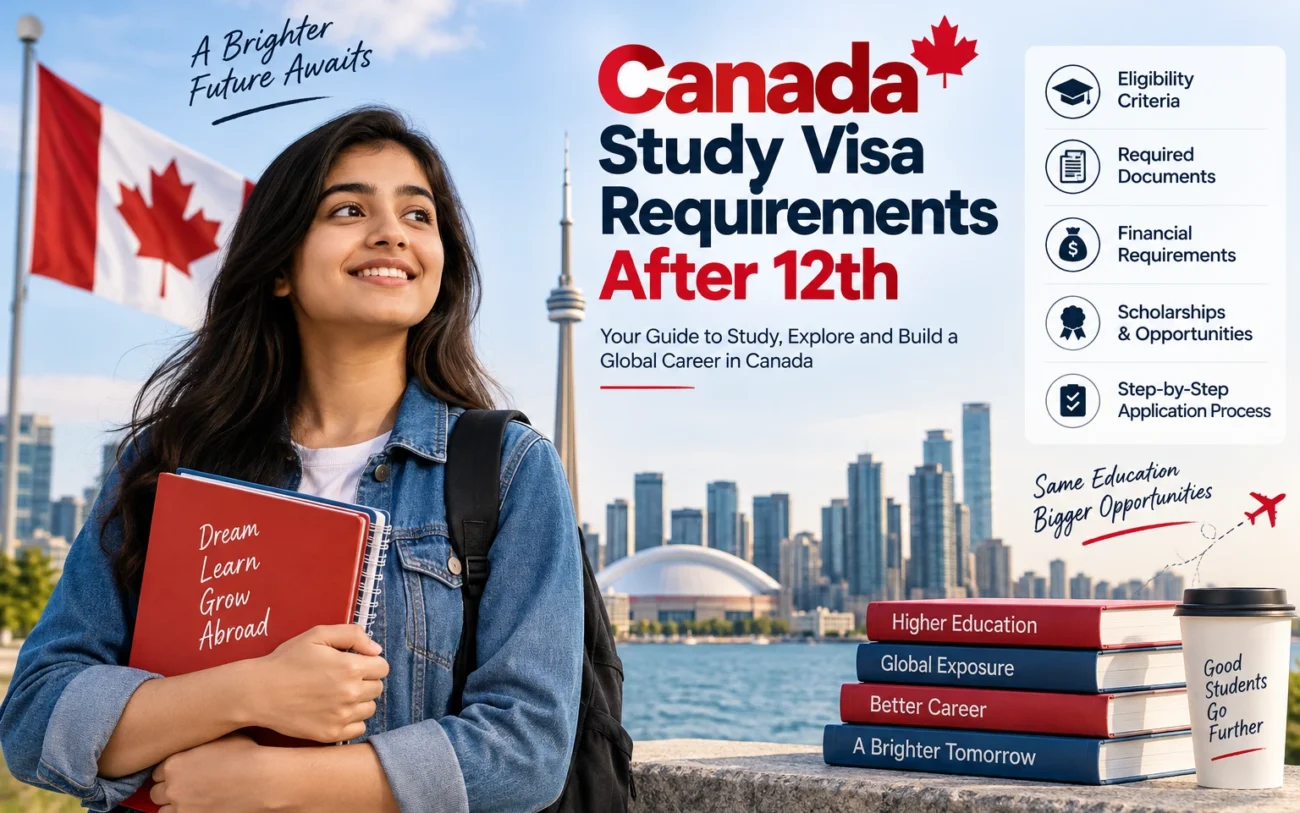
Canada Study Visa Requirements After 12th: A Complete Guide for Indian Students
Completing Class 12 is an important milestone for students who want to build an international career. Canada is one of the destinations considered by Indian students because it offers a wide range of undergraduate degrees, diplomas, and other post-secondary programs.
However, getting admission to a Canadian institution and getting permission to study in Canada are two different steps. Students need to understand both the academic admission requirements and the Canada study visa requirements after 12th before starting their application.
This guide explains the basic eligibility, documents, financial requirements, admission process, scholarships, and other important points students should know.
Can I Study in Canada After 12th?
Yes, Indian students can apply to study in Canada after completing Class 12, provided they meet the admission requirements of their selected institution and the eligibility requirements for a Canadian study permit.
Depending on your academic background, you can explore programs in areas such as:
- Business and Management
- Computer Science and Information Technology
- Engineering
- Healthcare
- Finance and Accounting
- Hospitality and Tourism
- Digital Marketing
- Data Analytics
- Social Sciences
- Media and Communication
Your Class 12 subjects, academic performance, English-language ability, and chosen program can affect your admission options.
Canada Study Visa Requirements After 12th
A Canadian study permit application generally requires students to demonstrate that they have been accepted by an eligible institution and that they can meet the requirements for studying in Canada.
The main requirements may include:
1. Class 12 Qualification
Students should have successfully completed Class 12 from a recognized educational board. The minimum academic percentage depends on the institution and program.
There is no single percentage requirement that applies to every Canadian college or university. Therefore, students should check the specific entry requirements of their chosen course.
2. Letter of Acceptance
Before applying for a study permit, students generally need a Letter of Acceptance (LOA) from a Canadian Designated Learning Institution (DLI).
Choosing the right institution is important because not every educational institution in Canada is authorized to host international students.
3. Provincial Attestation Letter
Many students applying for post-secondary studies need a Provincial Attestation Letter (PAL) or Territorial Attestation Letter (TAL), unless they fall under an applicable exemption.
Students should confirm whether they require a PAL/TAL before submitting their study permit application because the rules can vary according to the program and circumstances.
4. Proof of Financial Support
Students need to demonstrate that they have enough funds to support their studies and living expenses in Canada.
Financial planning may include:
- Tuition fees
- Living expenses
- Transportation costs
- Expenses for accompanying family members, where applicable
For applications submitted on or after September 1, 2026, a single student applying outside Quebec needs to show CAN$23,448 for one year of living expenses, excluding tuition and transportation.
Because financial requirements can be updated, applicants should always check the latest official requirements before applying.
5. English Language Requirement
Most Canadian institutions require international students to demonstrate English-language proficiency unless they qualify for an exemption.
Depending on the institution, students may be able to use an accepted test such as IELTS, PTE, TOEFL, or another approved examination.
The required score is different for every institution and program, so students should check the exact requirement before booking a test.
Documents Required for Canada Student Visa After 12th
The exact checklist depends on your personal circumstances, but students may need:
- Valid passport
- Class 10 and Class 12 certificates
- Academic transcripts
- English-language test results, where required
- Letter of Acceptance
- PAL/TAL, where applicable
- Proof of financial support
- Tuition payment evidence, if applicable
- Study plan or letter of explanation
- Photographs, where required
- Medical examination documents, if requested
- Police certificate, if required
- Additional documents requested by immigration authorities
Make sure that your information is consistent across your academic, financial, admission, and immigration documents.
How to Apply for Canada Study Permit After 12th
The process can be divided into a few major steps:
- Step 1: Complete Class 12 and review your academic options.
- Step 2: Select a suitable Canadian course and Designated Learning Institution.
- Step 3: Apply for admission and receive your Letter of Acceptance.
- Step 4: Obtain a PAL/TAL if it is required for your application.
- Step 5: Prepare your financial and personal documents.
- Step 6: Complete and submit your study permit application.
- Step 7: Complete biometrics or other requirements if requested.
- Step 8: Wait for the application decision and respond to any additional request from the authorities.
Starting the process early gives you more time to prepare documents and address any issues that may arise.
Can I Get Study Abroad Scholarships for Canada?
Yes, students can research study abroad scholarships offered by Canadian institutions and other organizations.
Scholarships may be based on:
- Academic performance
- Program of study
- Leadership
- Extracurricular achievements
- Specific eligibility criteria
Not every scholarship covers the full cost of education. Some provide partial tuition assistance or a fixed financial award.
Students should check scholarship deadlines separately because they may differ from university admission deadlines.
Should You Take Help From Abroad Education Consultants?
Students who are applying for the first time may find the process complicated. Abroad education consultants can help students understand course options, university applications, document requirements, scholarships, and application timelines.
Similarly, student visa consultants may provide assistance with preparing and organizing study permit applications.
However, students should choose professional advisers carefully and avoid anyone who promises guaranteed admission or guaranteed visa approval. The final study permit decision is made by Canadian immigration authorities.
Tips for a Strong Canada Study Permit Application
A few practical steps can make the application process more organized:
- Choose a course that fits your previous education and career plans.
- Research the institution before paying any fees.
- Prepare genuine and clearly explainable financial documents.
- Keep your academic and personal information consistent.
- Write an honest and personalized study plan.
- Check PAL/TAL requirements carefully.
- Don't rely on outdated information from social media or old blog posts.
- Always verify current immigration requirements through official Canadian government sources.
Final Thoughts
Studying in Canada after Class 12 can open the door to international education and new career opportunities, but proper planning is essential. From choosing the right course and institution to arranging finances and preparing a study permit application, every step deserves careful attention.
Instead of choosing a program only because it is popular, students should consider their academic background, career goals, budget, and long-term plans. If professional guidance is needed, reliable abroad education consultants or student visa consultants can help explain the process.
Most importantly, Canadian immigration requirements can change, so always verify the latest information from official sources before submitting your application.
Frequently Asked Questions
Yes. Students who have completed Class 12 can apply for eligible Canadian post-secondary programs if they meet the institution’s admission criteria and study permit requirements.
There is no universal percentage requirement. Each university, college, and program can have its own academic criteria.
The English-language requirement depends on the institution and program. Some institutions may accept different English tests or provide exemptions in specific circumstances.
The amount depends on tuition, living expenses, transportation, and other circumstances. For applications submitted from September 1, 2026, the living-expense requirement for one student outside Quebec is CAN$23,448 for one year, excluding tuition and transportation.
Many undergraduate applicants require a PAL/TAL, although exemptions exist. Students should check the current rules applicable to their specific program and situation.
Yes. International students can explore university and external scholarships, although eligibility and funding amounts vary.