How to Reapply After a Study Visa Refusal
November 2, 2026

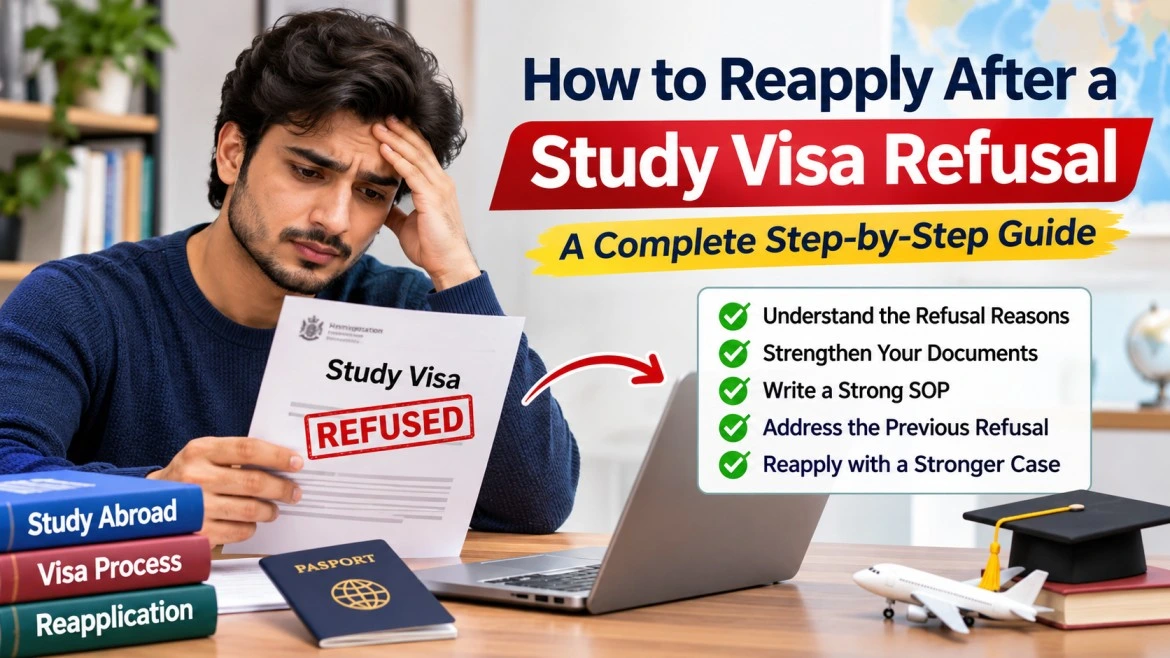
How to Reapply After a Study Visa Refusal: A Complete Step-by-Step Guide

Getting a study visa refusal can be disappointing, especially after spending time, money, and effort preparing your application. Many students feel confused about what went wrong and whether they will ever get another opportunity to study abroad.

However, a study visa refusal does not always mean the end of your study abroad journey. In many cases, you can submit a fresh application after understanding the reasons behind the refusal and correcting the problems in your previous application.

The important thing is not to rush into reapplying. Before submitting another application, you should carefully review the refusal letter, identify the weaknesses, arrange supporting documents, and prepare a stronger case.

In this guide, we will explain how to reapply after a study visa refusal and what you can do to improve your chances of receiving a positive decision.

1. Understand Why Your Study Visa Was Refused

The first and most important step is to understand why your previous application was refused. Immigration officers generally provide reasons in a refusal letter or decision document.
Some common reasons for study visa refusal include:
What should you do?
Read your refusal letter carefully and identify every concern mentioned by the immigration officer. Do not focus only on the main refusal reason. Even smaller concerns may affect your next application.
For example, if your visa was refused because of insufficient financial evidence, simply showing a higher bank balance may not solve the problem. You may also need to demonstrate where the money came from and whether the funds are genuinely available for your education.

2. Do Not Submit the Same Application Again

One common mistake students make is submitting another visa application with almost the same documents and information.
If your previous application was refused because of weak financial evidence, unclear academic intentions, or missing documents, repeating the same mistakes can lead to another refusal.
Before reapplying, compare your previous application with your new application.
What should you do?
Your new application should demonstrate meaningful improvements rather than simply repeat the previous submission.

3. Strengthen Your Financial Documents

Financial issues are among the common concerns in student visa applications. Immigration authorities need to establish that you can afford tuition fees, living expenses, accommodation, and other required costs.
If your previous application was refused because of financial concerns, review your financial evidence carefully.
Depending on the destination country’s requirements, supporting documents may include:

Important: Do not arrange artificial bank balances or submit misleading financial documents. Your financial evidence must be genuine, verifiable, and consistent with the information in your application.

4. Prepare a Strong Statement of Purpose (SOP)

Your Statement of Purpose (SOP) plays an important role in explaining your educational background, course selection, future plans, and reasons for choosing a particular country.
If your previous study visa was refused because your study intentions were unclear, you should improve your SOP.
A strong SOP should clearly explain:
Avoid copying SOP samples from the internet. Your statement should reflect your real educational background, personal circumstances, and future career objectives.
If there is a study gap, explain it honestly and provide relevant supporting documents wherever possible.

5. Address Your Previous Visa Refusal in the New Application

If you have previously received a visa refusal, answer questions about your immigration history truthfully.
Never hide your previous refusal or provide incorrect information. Immigration authorities may have access to your previous application records.
You can prepare a separate explanation letter describing:
For example, if your previous application had financial documentation issues, explain how you have now provided clearer evidence of your sponsor’s income and the availability of funds.
A clear explanation helps the officer understand what has changed since your previous application.

6. Check All Documents Before Reapplying

Before submitting your new study visa application, review every document carefully.
Your checklist may include:
Document requirements vary depending on the destination country. Always follow the latest official immigration guidelines.

7. Should You Appeal or Submit a New Application?

This is an important decision after receiving a study visa refusal.
An appeal or administrative review may be available in certain countries and circumstances. However, not every refusal decision comes with an appeal right.
Consider an appeal or review when:
Consider a fresh application when:
Check the refusal decision carefully because appeal deadlines can be strict. In some cases, reapplying may be more appropriate than appealing.

8. Take Professional Guidance Before Your Second Application

If you are unsure why your study visa was refused, consider getting your refusal letter and previous application reviewed by a qualified immigration professional.
A proper refusal assessment should examine the actual reasons for rejection, your previous documents, financial evidence, academic profile, and the immigration rules of your destination country.
Avoid anyone who guarantees a visa approval. No consultant can guarantee an immigration decision.
The purpose of professional guidance is to identify weaknesses, explain possible solutions, and help you prepare a more complete and accurate application.

Final Thoughts

A study visa refusal can be frustrating, but it does not automatically close the door to your international education goals. The key is to understand what went wrong and take corrective action before applying again.
Review your refusal letter, strengthen your financial documents, prepare a genuine SOP, address previous concerns, and ensure that your new application meets the destination country’s requirements.
Remember, a stronger second application is not about submitting more documents. It is about submitting the right evidence and clearly addressing the concerns raised in your previous refusal decision.
Do not rush your second application. Prepare it carefully, correct your mistakes, and make every document count.

Frequently Asked Questions (FAQs)

Yes. In many countries, students can submit a new study visa application after a refusal. However, you should first understand the refusal reasons and address the concerns before reapplying.
There is no universal waiting period. It depends on the destination country, visa category, and circumstances of your refusal. You should reapply when you have corrected the issues identified in your previous application.
A previous refusal may be considered during your next application. However, it does not automatically mean that your new application will be refused. Providing honest information and addressing previous concerns can help strengthen your case.
Not necessarily. If your chosen university and course are appropriate, changing institutions may not solve the actual problem. First, identify why your previous application was refused.
Yes, subject to the immigration rules of the other country. However, you must disclose previous refusals whenever the application asks about your immigration history.
Common documents include your passport, admission documents, academic records, financial evidence, SOP, previous refusal letter, and an explanation letter. Additional documents depend on the destination country.
It may still be possible, depending on the reasons for the previous refusals and whether you can address them. Every application is assessed according to the relevant immigration requirements and individual circumstances.
It depends on your refusal decision. An appeal or review may be suitable if there was a legal, factual, or procedural error. A fresh application may be more appropriate if you can correct the weaknesses in your previous application.

Make a Comment

Er. JP SINGH

Author Image
Er. JP Singh – 23+ years of expertise in Immigration & Education Consultation, Law qualified from Canada, guiding clients to global success.