
May 12, 2026
Vocational Training in Germany: Complete Guide
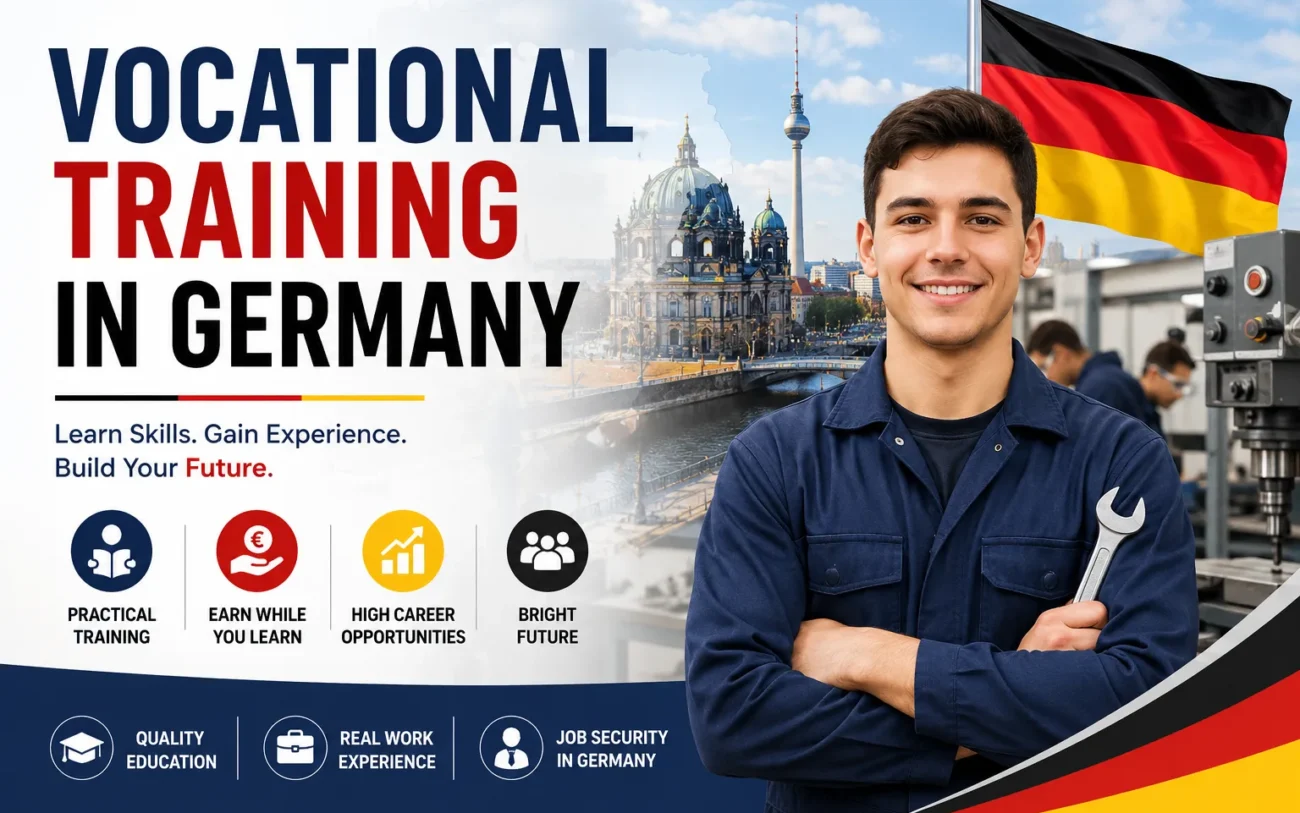
Germany has become one of the most preferred countries for students who want quality education and strong career opportunities. In recent years, Vocational training in Germany has gained massive popularity among international students because it offers practical learning, industry experience, and financial support during studies.
Unlike traditional education systems, Germany focuses heavily on skill development and hands-on training. This helps students become job-ready while learning in a real working environment. For students looking for affordable education and better career growth, this pathway can be a smart choice.
What is Ausbildung?
Ausbildung is a professional training system where students combine classroom education with practical work experience. Instead of studying only theory, students work directly with companies and learn industry-related skills.
Most programs last between 2 and 3.5 years depending on the field. During this period, trainees attend vocational schools and also work in companies to gain practical experience.
This training model is highly respected because students graduate with real workplace knowledge and professional skills.
Benefits of Vocational Training in Germany
Many international students prefer Germany because the country offers a balance between education and career opportunities. The training system is designed to prepare students for real jobs instead of only academic learning.
Earn While Studying
One of the biggest advantages is the monthly stipend students receive during training. Depending on the industry and company, students can earn between €800 and €1,500 every month.
This financial support helps students manage living expenses and become more independent.
Practical Learning Experience
Students work directly with companies and gain real industry exposure. This practical experience improves confidence and increases future job opportunities.
Affordable Education
Compared to many countries, Germany offers affordable study options. Many professional training programs have very low tuition fees, making education accessible for international students.
Strong Career Opportunities
Germany has a high demand for skilled workers in sectors like healthcare, hospitality, IT, engineering, and construction. Students who complete training programs often receive full-time job opportunities.
International Work Exposure
Working in German companies helps students understand global work culture and professional standards.
Popular Courses for International Students
Germany offers a wide range of skill-based programs for students from different educational backgrounds.
Some of the most popular fields include:
- Nursing and Healthcare
- Hotel Management
- Information Technology
- Automotive Technology
- Mechatronics
- Electrician Training
- Plumbing
- Retail Management
- Construction and Engineering
- Bakery and Culinary Arts
Healthcare and technical sectors currently offer excellent career opportunities because Germany needs trained professionals in these industries.
Eligibility Requirements for Training Programs
The eligibility criteria may vary depending on the course and company. However, most programs follow similar requirements.
Educational Qualification
Students generally need:
- 10th or 12th pass certificate
- Basic academic background
- Good communication skills
Some technical programs may ask for additional qualifications.
German Language Skills
German language knowledge is very important because most vocational schools and companies use German for communication.
Many programs require:
- A1, A2, or B1 German language certificate
Healthcare-related fields may require higher language proficiency.
Age Requirement
Most international applicants are usually between 18 and 30 years old.
Required Documents
Students normally need:
- Valid passport
- Educational certificates
- Updated CV or Resume
- Language certificate
- Motivation letter
Well-prepared documents improve the chances of selection.
How to Apply for Vocational Training in Germany
Students who prepare properly can complete the application process more smoothly. Following the right steps is important for success.
Students should first identify their interests and future career goals before selecting a training field.
Language skills improve communication and help students adjust to workplace environments more easily.
A strong CV and motivation letter can create a positive impression on employers.
Students can apply directly to German companies or vocational schools that offer professional training opportunities.
Some companies conduct online interviews to evaluate communication skills and interest in the field.
After receiving the offer letter, students can apply for a vocational training visa for Germany.
Salary During Training Programs
One major reason students choose Germany is the opportunity to earn while learning.
Average monthly stipend in different sectors:
| Field | Monthly Salary |
|---|---|
| Nursing | €1,100 – €1,400 |
| IT & Technology | €1,000 – €1,300 |
| Hospitality | €800 – €1,200 |
| Technical Trades | €1,000 – €1,500 |
In many industries, salaries increase every year during the training period.
Career Opportunities After Completing Training
Germany offers excellent career opportunities for skilled professionals. Students who complete professional training often receive job offers from the same companies where they trained.
After completion, candidates can:
- Apply for full-time jobs
- Gain international work experience
- Extend residence permits
- Build long-term careers
- Apply for permanent residency later
Because trainees already have workplace experience, companies trust their practical skills more easily.
Challenges International Students May Face
Although Germany offers many benefits, students may also face some difficulties during the initial period.
Language Barrier
German language can be challenging for beginners. Good communication skills are important for daily life and workplace interaction.
Cultural Adjustment
Students may need time to adapt to Germany’s work culture, food, and lifestyle.
Competitive Selection Process
Popular courses receive many applications, so students should prepare documents carefully.
Tips for Students Planning to Study in Germany
Students who want to build a successful career should focus on preparation and skill development.
Helpful tips include:
- Start learning German early
- Prepare a professional CV
- Research industries with high demand
- Improve communication skills
- Apply to multiple companies
- Stay updated about visa requirements
Proper planning can improve the chances of success.
Conclusion
For students who want practical education, international work exposure, and strong career opportunities, Vocational training in Germany can be an excellent option. The combination of classroom learning and company training helps students develop professional skills and real workplace experience.
Germany continues to welcome skilled international candidates because of its growing demand for trained professionals. With proper preparation, language skills, and dedication, students can build a successful future through this career-focused education pathway.
FAQs Vocational training in Germany
It is a practical training system where students learn professional skills through classroom education and company work experience.
Yes, international students can apply if they meet the educational and language requirements.
Yes, most programs require basic German language knowledge.
Yes, students receive a monthly stipend during their training period.
Healthcare, IT, engineering, hospitality, and technical fields are highly popular.
Most programs last between 2 and 3.5 years.
Yes, many students receive job opportunities and continue working in Germany.
It depends on career goals. Practical training is ideal for students who want hands-on experience and faster career opportunities.