March 23, 2026
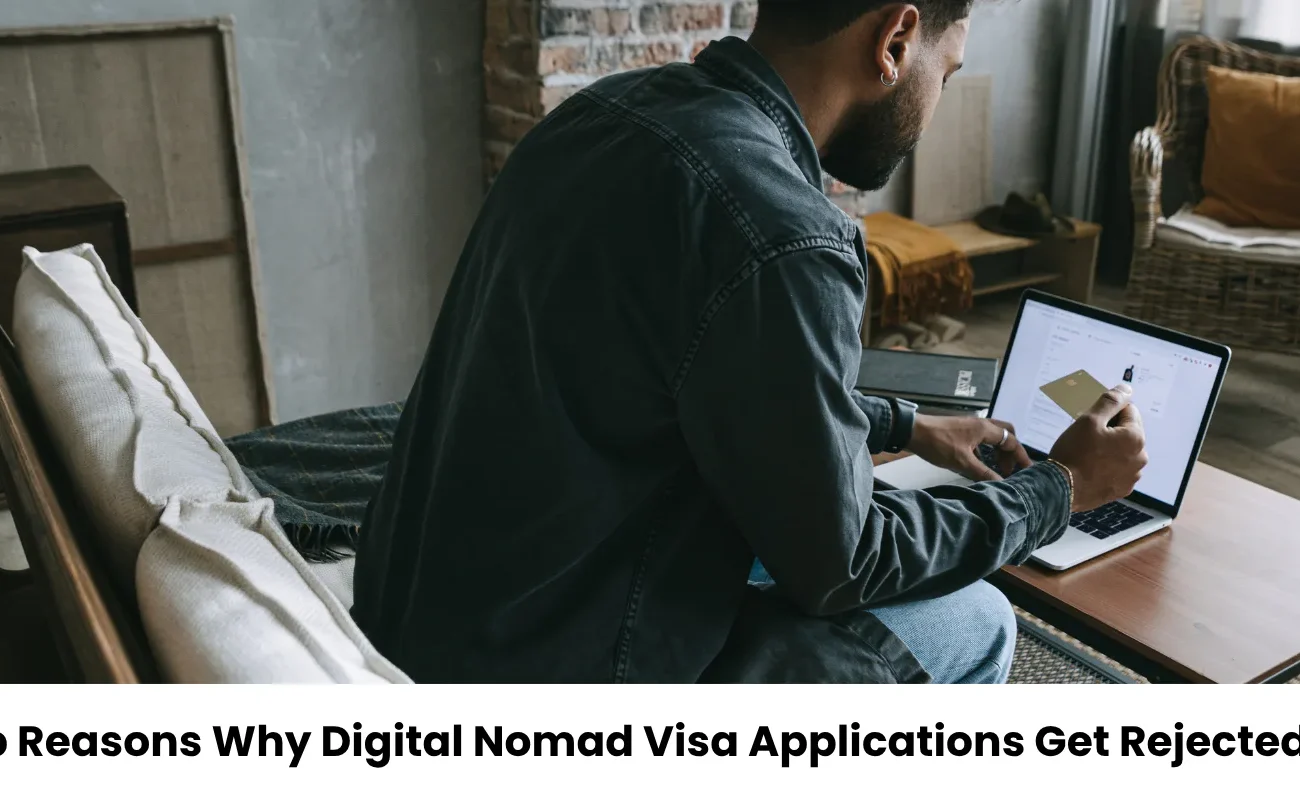
Top Reasons Why Digital Nomad Visa Applications Get Rejected (Reality No One Tells You)
Introduction
Digital Nomad Visa is being marketed everywhere as an easy pathway to live in Europe. Social media, agents, and online platforms are presenting it as a simple process—just show income, submit documents, and get approval.
The reality is completely different.
This visa category is becoming one of the most risky and highly scrutinized applications, where even a small mistake can lead to rejection, permanent record damage, and serious impact on future visas. Most applicants realize this only after receiving a refusal.
In my 23+ years of experience, I have seen a clear pattern—people do not get rejected because they are weak candidates. They get rejected because their case is poorly structured, wrongly guided, and legally misunderstood.
The Truth About Income Proof – Where Most Applicants Fail
Applicants believe that showing bank statements or freelance income is enough. This assumption itself is dangerous. Embassies are not just looking at your income—they are verifying its legality, stability, and traceability.
If your income is irregular, unsupported by contracts, or does not clearly establish remote work, your file immediately becomes doubtful. Once doubt enters your application, it is almost impossible to recover.
Many applicants try to “adjust” their financials at the last moment, and this is exactly where refusals begin. Visa officers are trained to detect such patterns, and once they do, your credibility is questioned permanently.
This is where professional intervention becomes critical. At SWICS, every income document is legally aligned, structured, and cross-verified before submission, ensuring that your profile stands strong under embassy scrutiny.
Remote Work Proof – The Most Misunderstood Requirement
One of the biggest myths is that saying “I work online” is enough. It is not.
Embassies require clear, legally acceptable proof that your work is genuinely remote and not connected to the host country. If this is not properly demonstrated, your application can be treated as an attempt to enter the country for unauthorized employment.
This single mistake has caused countless rejections.
Under the guidance of Er. JP Singh, every case is carefully analyzed to establish clear remote work positioning, supported with proper agreements, declarations, and documentation that match embassy expectations—not assumptions.
Documentation Mistakes That Silently Destroy Your Application
Most applicants never realize where they went wrong because the mistake is not always visible. A missing document, improper format, lack of translation, or weak presentation can silently destroy your application.
Embassies do not guide you. They do not correct your mistakes. They simply reject.
And once rejected, the same weak documentation continues to follow your profile in future applications.
This is why documentation is not a formality—it is a legal presentation of your case. At SWICS, files are prepared with a case-building approach, not just document collection. Every paper has a purpose, and every detail is aligned to avoid refusal risk.
Financial Credibility – Where Doubt Becomes Rejection
Digital Nomad Visa is not only about earning—it is about proving that your financial life is genuine, stable, and sustainable.
Sudden deposits, unclear sources of funds, or inconsistent banking history immediately raise red flags. Many applicants unknowingly damage their own case by trying to “prepare” finances just before applying.
Once financial doubt is created, the visa officer starts questioning everything—your work, your intent, and your credibility.
This is why financial structuring must be done carefully and in advance. With 23+ years of experience, Er. JP Singh personally understands how embassies evaluate financial behavior, and guides applicants accordingly to avoid unnecessary risk.
Weak SOP – The Silent Killer of Strong Profiles
Many applicants focus on documents but ignore one of the most powerful elements—the Statement of Purpose.
A generic or copied SOP signals lack of seriousness. It creates confusion about your intent and opens the door for rejection. Embassies want clarity, not general statements.
A strong SOP is not written—it is strategically built.
Under professional guidance, your SOP becomes a legal explanation of your case, clearly presenting your intent, work structure, and compliance with visa rules. Without this, even strong profiles fail.
Previous Refusals – The Mistake That Follows You Forever
What many people don’t understand is that visa history never disappears. Every refusal is recorded and visible.
Ignoring past refusals or failing to address them properly is one of the biggest reasons for repeated rejections. Embassies see patterns, and once your profile is marked weak, it becomes difficult to rebuild trust.
This is where legal understanding becomes essential. At Straight Ways International Law Services, refusal cases are handled with structured explanation, documentation correction, and legal positioning, giving applicants a real chance to recover.
The Biggest Reality – Wrong Consultant Can Cost You Everything
The harsh truth is that most refusals are not caused by the applicant—but by the person guiding them.
Inexperienced agents, incomplete advice, or casual handling of documentation can damage your profile permanently. Digital Nomad Visa is not a basic file—it requires deep understanding of immigration law, embassy psychology, and documentation strategy.
One wrong move can cost you:
- Your visa
- Your money
- Your future immigration chances
Why Applicants Trust Er. JP Singh
With over 23 years of experience in immigration, visa processing, and refusal handling, Er. Jatinder Pal Singh is not just a consultant—he is an immigration law-qualified professional who understands the system from a legal perspective.
At SWICS Pvt. Ltd. and Straight Ways International Law Services, every application is handled with:
- Detailed profile evaluation
- Risk identification before filing
- Legal structuring of documents
- Strong case presentation aligned with embassy expectations
Because success in today’s visa process is not about luck—it is about precision, experience, and legal understanding.
Conclusion
Most people search for answers after their visa gets rejected. By that time, the damage is already done.
If you are planning to apply for a Digital Nomad Visa, understand this clearly:
This is not a trial-and-error process.
This is a one-chance, high-risk application.
FAQs – Digital Nomad Visa
Most applicants believe that having a good income is enough, but in reality, embassies do not evaluate income in isolation. They carefully examine whether the income is stable, legally documented, and properly structured according to visa requirements. In many cases, applicants fail to present their financial profile correctly, which creates doubt in the mind of the visa officer. At SWICS Pvt. Ltd., under the guidance of Er. JP Singh, every applicant’s income is deeply analysed, structured, and supported with proper documentation so that it clearly satisfies embassy expectations and removes any scope of suspicion.
Unlike general agents who simply collect documents, SWICS follows a complete case-building approach. Er. JP Singh, being immigration law qualified with 23+ years of experience, personally understands how embassies assess applications. Each file is prepared step-by-step, starting from profile evaluation, identifying risk factors, restructuring weak areas, and then presenting documents in a legally strong format. Every document is aligned with the visa rules, ensuring that the application is not just complete, but convincing.
The biggest mistake is assuming that this visa category is simple and can be handled casually. Many applicants either apply themselves or rely on inexperienced consultants who do not understand the legal and technical requirements. This leads to weak documentation, incorrect presentation, and ultimately rejection. At SWICS, we prevent this risk by handling each case with professional precision, ensuring that no critical aspect is overlooked.
Income proof is one of the most sensitive parts of the application. SWICS carefully reviews the applicant’s bank statements, contracts, invoices, and income flow to ensure consistency and credibility. If any gap or weakness is identified, it is corrected before filing. Er. JP Singh ensures that the income is not only sufficient but also properly justified, traceable, and aligned with remote work requirements, which significantly reduces the chances of rejection.
Yes, and this is where professional expertise becomes crucial. Many freelancers face rejection because their income appears inconsistent or poorly documented. At SWICS, such cases are handled by structuring the income properly, supporting it with contracts, invoices, and explanations that clearly establish stability. With the right presentation, even complex freelance profiles can be converted into strong visa cases.
Remote work proof is not just about stating that you work online. It must be legally demonstrated. SWICS ensures that employer letters, client agreements, and work structure are clearly defined in a way that satisfies embassy conditions. Under the supervision of Er. JP Singh, every detail is checked to ensure that there is no ambiguity regarding the nature of work, which is one of the major reasons for refusal in self-filed applications.
Documentation is not just a requirement—it is the foundation of your case. Even a small mistake, such as incorrect format or missing translation, can lead to rejection. SWICS treats documentation as a legal presentation, where each document is carefully verified, structured, and aligned with embassy standards. This approach ensures that the file is strong, complete, and professionally presented.
A strong SOP can make or break your application. Most applicants submit generic or copied SOPs, which immediately weaken their case. At SWICS, SOP is not written casually—it is strategically developed. Er. JP Singh ensures that the SOP clearly explains the applicant’s intent, work structure, and compliance with visa rules, making it a powerful supporting document that strengthens the overall application.
Yes, and this is one of our strongest areas. Previous refusals can significantly impact future applications if not handled properly. At Straight Ways International Law Services, refusal cases are analysed in detail, and a proper strategy is developed to address the reasons for rejection. With legal understanding and structured documentation, we help applicants rebuild their profile and improve their chances of approval.
Financial doubts are one of the main reasons for rejection. SWICS carefully reviews the applicant’s financial history to identify any red flags such as sudden deposits or unexplained funds. These issues are resolved before submission. Er. JP Singh ensures that the financial profile appears genuine, stable, and trustworthy, which is critical for visa approval.